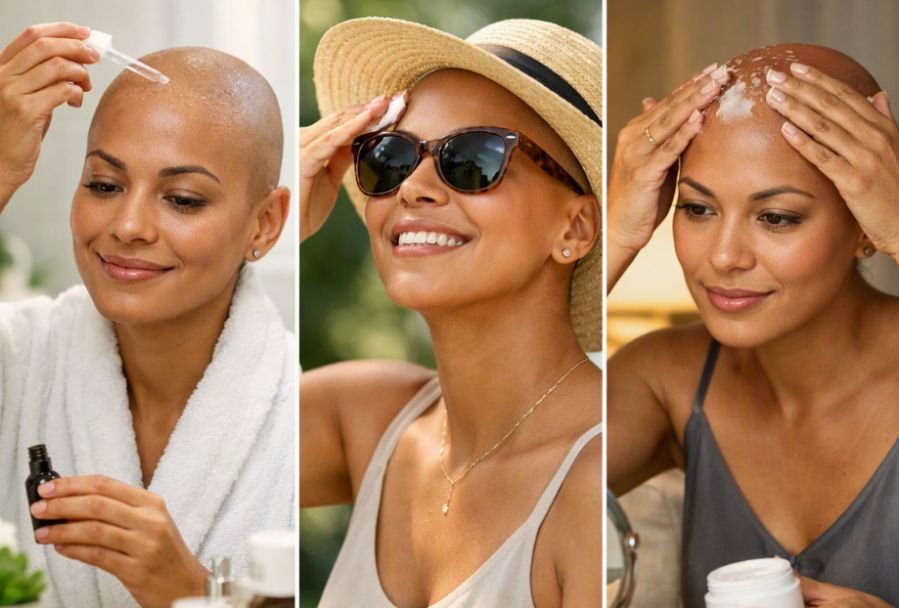
Living without hair does not mean living without a beauty routine. An exposed scalp faces sunlight, sweat, pollution, friction, and product buildup every day. Shaving can also leave the skin feeling dry, tight, or irritated. I treat my scalp as an extension of my facial skin, but I adjust the products and techniques to suit its unique needs.
A consistent scalp care routine for bald women does not need to involve a crowded bathroom shelf. Gentle cleansing, balanced hydration, careful shaving, controlled exfoliation, and reliable sun protection can keep the scalp smooth and comfortable. The routine should also reflect whether the skin is dry, oily, sensitive, or prone to razor bumps.
What Is the Best Morning Routine for a Bald Scalp?
A morning routine should remove excess oil without stripping the skin, restore moisture, manage shine, and protect the exposed scalp from ultraviolet radiation.
Cleanse Without Stripping Away Moisture
I begin with lukewarm water and a gentle, sulfate-free facial cleanser or moisturizing shampoo. This removes overnight sebum, sweat, and residue without leaving the scalp uncomfortably tight.
Women with oily skin may benefit from daily morning cleansing. A dry or sensitive scalp may only need a water rinse on some mornings, followed by a complete cleanse later in the day. Harsh bar soap and strongly fragranced body wash can disrupt the skin barrier and worsen dryness.
Hydrate the Scalp While It Is Damp
After cleansing, I pat my head gently with a clean towel but leave the skin slightly damp. I then apply a lightweight, non-comedogenic moisturizer. Ingredients such as hyaluronic acid and glycerin attract water, while ceramides and squalane support the skin barrier.
A small amount usually provides sufficient hydration. Applying too much oil or heavy cream may contribute to buildup, clogged pores, or an excessively glossy appearance.
Control Excess Scalp Shine

Natural oil, moisturizer, sunscreen, and sweat can make an exposed scalp appear shinier during the day. If I want a matte finish, I choose an oil-free or mattifying moisturizer and allow it to absorb before applying sunscreen.
Blotting papers can remove excess oil without requiring another full wash. However, a completely oil-free scalp is not the goal. Natural sebum helps protect the skin, so aggressive degreasing can cause irritation and rebound oiliness.
Apply Broad-Spectrum Sunscreen Every Morning
Hair normally provides some protection from direct sunlight. Without it, the scalp can burn easily and accumulate sun damage. I finish my morning routine with a broad-spectrum, water-resistant SPF 30 or higher, covering the crown, back of the head, ears, and neck.
Both mineral and chemical sunscreens can work. The best choice depends on skin sensitivity, skin tone, comfort, and finish. Sunscreen should be reapplied after swimming or heavy sweating and approximately every two hours during extended outdoor exposure. A wide-brimmed hat provides additional protection but does not replace sunscreen consistently.
How Should Bald Women Care for Their Scalp at Night?
My evening routine focuses on removing sunscreen, sweat, pollution, makeup, wig adhesive residue, and other substances that have accumulated during the day.
I wash with a gentle cleanser and lukewarm water, paying attention to the hairline and the area behind my ears. Hot water may feel relaxing, but it can intensify dryness. I pat the scalp dry rather than rubbing it with a towel.
If the skin feels tight, I apply a slightly richer fragrance-free cream containing ceramides, jojoba oil, or squalane. I use oils sparingly because heavier formulas can trap residue or aggravate follicle-related bumps in some people.
Targeted products require more care. An anti-dandruff shampoo may help certain flaky scalp conditions, but alopecia has many possible causes and cannot be treated with a general cosmetic serum. I would consult a board-certified dermatologist before using a hair-loss treatment, especially when loss begins suddenly or appears with pain, inflammation, or scarring.
How Often Should a Bald Scalp Be Exfoliated?

Exfoliating once or twice a week can lift dead skin, reduce buildup, and help prevent clogged pores and ingrown hairs. A low-strength BHA product containing salicylic acid may suit an oily or bump-prone scalp. Women with dry skin may prefer a gentler exfoliating formula used less frequently.
Physical scalp scrubs require a light touch. Large, rough particles and vigorous rubbing can create irritation, particularly on freshly shaved skin. I never exfoliate over cuts, active razor burn, inflamed bumps, eczema, or painful patches.
A five-minute manual massage can also help me relax and distribute moisturizer evenly. Although massage may temporarily increase local circulation, I do not treat it as a guaranteed method for reversing alopecia or stimulating hair regrowth.
How Can Women Shave Their Heads Without Razor Bumps?
Comfortable shaving begins before the razor touches the skin. I soften the stubble with a warm shower or damp cloth, then apply a fragrance-free shaving cream formulated for sensitive skin.
I use a clean, sharp razor and glide it slowly in the direction of growth. Light pressure and fewer passes reduce the chance of nicks, razor burn, and ingrown hairs. An electric head shaver may not provide the closest finish, but it can be gentler for skin that reacts poorly to manual blades.
After shaving, I rinse with cool water, pat the scalp dry, and apply an alcohol-free moisturizer, soothing balm, or plain aloe vera gel. I avoid strong fragrance, alcohol-heavy aftershave, and exfoliating acids until the skin has calmed. Razors and electric shavers should be cleaned after every use and allowed to dry fully.
How Do Wigs, Scarves, and Hats Affect Scalp Health?
Wigs and head coverings can trap warmth, sweat, oil, and residue against the skin. I cleanse my scalp after prolonged wear, especially in hot or humid weather, and allow it to dry completely before putting on another covering.
Clean wig caps, scarves, hats, pillowcases, and shaving towels reduce repeated exposure to oil and bacteria. If wig adhesive is part of my routine, I use an appropriate remover and avoid scraping or pulling at the skin. Persistent redness near the hairline may indicate friction, irritation, or sensitivity to an adhesive.
For many people, stories about women embracing bald beauty can also offer practical inspiration for choosing head coverings, makeup, and scalp-care habits that feel comfortable and authentic.
Scalp foundation can create a more even-looking skin tone, but it should be removed completely at night. Dark marks caused by repeated razor bumps need gentle care and prevention rather than aggressive scrubbing.
When Should I See a Dermatologist About My Scalp?

Occasional dryness or mild post-shave sensitivity often improves with a gentler routine. However, I would seek professional evaluation for painful bumps, pus, bleeding, severe itching, spreading redness, thick scaling, or sores that do not heal. A new or changing dark spot also deserves prompt attention.
Women experiencing sudden, patchy, or scarring hair loss should consult a dermatologist rather than relying only on oils or over-the-counter scalp serums.
Frequently Asked Questions
1. Should bald women wash their scalp every day?
Daily cleansing may help after sweating, exercising, wearing sunscreen, or using scalp makeup. A dry or sensitive scalp may need less frequent cleansing with a gentle product.
2. Can I use facial moisturizer on my bald head?
Yes. A lightweight, fragrance-free, non-comedogenic facial moisturizer can work well. Choose the texture according to whether your scalp is dry, oily, sensitive, or shine-prone.
3. What should I apply immediately after shaving my head?
Apply an alcohol-free moisturizer, soothing balm, or gentle aloe vera gel. Avoid fragrance, exfoliating acids, and heavy rubbing while the freshly shaved skin recovers.
4. Does a scalp care routine for bald women change when wearing wigs?
Yes. Wig wearers should pay closer attention to sweat, friction, adhesive residue, and cleaning their wig caps. The scalp should be clean and fully dry before it is covered again.
A Routine That Lets a Bald Scalp Thrive
I believe the best routine is the one that keeps the scalp comfortable without making daily care complicated. Gentle cleansing, lightweight hydration, controlled exfoliation, thoughtful shaving, and broad-spectrum sunscreen form a dependable foundation.
I also find inspiration in how female celebrities with alopecia embrace visible hair loss, develop personalized beauty routines, and redefine confidence without allowing appearance to limit their style.
I also adjust products based on what my skin communicates. Tightness may call for richer hydration, while recurring bumps may require a gentler shaving method. With consistency and careful observation, a bald scalp can look smooth, balanced, and confidently radiant.